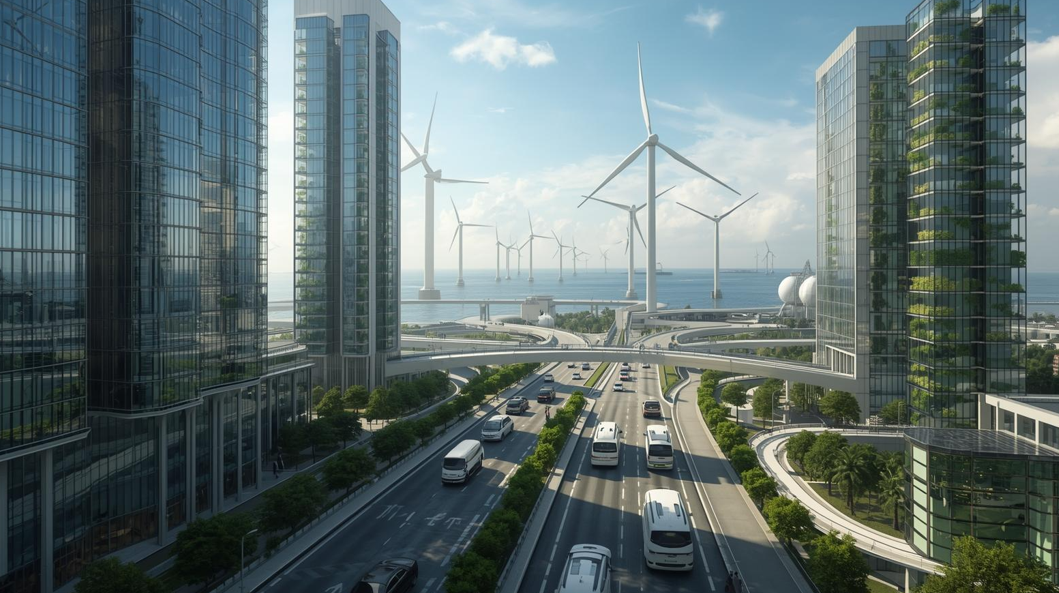
1. Renewable Energy Breakthroughs
Renewable energy is at the heart of the green transition. It has moved far beyond solar panels and wind farms to become a multi-dimensional field with groundbreaking developments.
Solar Power
- Perovskite solar cells are emerging as a game changer with higher efficiency and lower production costs than traditional silicon panels.
- Building-Integrated Photovoltaics (BIPV): Transparent solar glass integrated into windows and building façades makes urban architecture energy-generating.
- Floating solar farms are being deployed on lakes, dams, and reservoirs to maximize space efficiency while reducing evaporation.
Wind Energy
- Floating offshore wind turbines allow countries with deep coastal waters (like Japan and Norway) to tap into vast wind potential.
- Taller turbine designs now reach higher altitudes where wind is stronger and more consistent.
- AI-powered predictive maintenance improves efficiency and reduces downtime of wind farms.
Geothermal and Other Sources
- Enhanced Geothermal Systems (EGS) are being tested to drill deeper and unlock clean energy even in regions without natural hot springs.
- Ocean-based energy systems — tidal and wave power — are moving from experimental to commercial stages.
Impact: Renewables are projected to become the world’s dominant energy source by 2030, drastically cutting carbon emissions and reducing reliance on fossil fuels.
2. Carbon Capture and Negative Emissions
While cutting emissions is crucial, scientists emphasize that removing CO₂ already in the atmosphere is equally vital. Enter Carbon Capture, Utilization, and Storage (CCUS) technologies.
Key Innovations in Carbon Capture
- Direct Air Capture (DAC): Companies like Climeworks and Carbon Engineering are pioneering large-scale plants that filter CO₂ directly from the air.
- Bioenergy with Carbon Capture and Storage (BECCS): Combines biomass energy production with carbon capture to deliver negative emissions.
- Mineralization and sequestration: Converting captured CO₂ into stone-like materials or injecting it underground for permanent storage.
CO₂ Utilization
- Turning captured carbon into synthetic fuels (aviation fuel, methanol).
- Using CO₂ in construction materials like concrete, which absorbs carbon over time.
- Innovating carbon-based polymers for industrial products.
Startups leading the way:
- Climeworks (Switzerland): Operating DAC plants that remove thousands of tons of CO₂ annually.
- Charm Industrial (USA): Injecting bio-oil into geological formations for permanent carbon storage.
- Carbon Clean (UK): Offering modular capture solutions for factories and industrial sites.
3. Electric Mobility and Transport Innovation
Transportation contributes nearly 25% of global CO₂ emissions, making electric and alternative mobility essential to climate solutions.
Electric Vehicles (EVs)
- Longer-range EV batteries with solid-state technology are on the horizon, promising safer, faster charging, and longer-lasting performance.
- Affordable EV models from companies like BYD, Tata Motors, and Tesla are driving mass adoption.
- Electric trucks and buses are electrifying logistics and public transport sectors.
Alternative Transport Innovations
- Hydrogen fuel cell vehicles (FCEVs): Especially for heavy-duty trucks and ships where batteries are less practical.
- E-bikes and micro-mobility (e-scooters, shared mobility platforms) are revolutionizing urban travel.
- Autonomous and shared mobility solutions integrate AI to optimize routes, reduce congestion, and minimize emissions.
Charging Infrastructure
- Ultra-fast charging stations reduce EV charging times to under 15 minutes.
- Wireless charging roads are being piloted in countries like Sweden and Israel.
- Smart grid integration allows EVs to feed power back to the grid during peak demand.
4. Sustainable Living Solutions
Fighting climate change requires rethinking not just how we power our world, but also how we design our homes, manage waste, and consume resources.
Smart and Green Homes
- Net-zero homes produce as much energy as they consume through solar panels, energy-efficient appliances, and insulation.
- Smart thermostats and IoT devices help optimize energy consumption.
- Vertical farming in homes brings food production closer, reducing transport emissions.
Waste Reduction and Circular Economy
- Biodegradable plastics from algae, mushrooms, and corn starch are replacing petroleum-based plastics.
- Circular fashion: Companies like Patagonia and Allbirds encourage recycling, repair, and resale of clothing.
- Smart recycling bins powered by AI sort and process waste more efficiently.
Water and Food Innovations
- Precision agriculture uses drones and sensors to reduce water, fertilizer, and pesticide use.
- Lab-grown meat and plant-based proteins lower methane emissions from livestock farming.
- Atmospheric water generators produce clean drinking water from humidity in the air.
5. Startups and Global Initiatives Driving Green Innovation
Notable Green Startups
- Rivian (USA): Electric trucks and SUVs redefining sustainable adventure vehicles.
- Olio (UK): Food-sharing app reducing household waste by connecting neighbors.
- Too Good To Go (Denmark): Partnering with restaurants to sell surplus food at reduced prices.
- Northvolt (Sweden): Building Europe’s largest battery factory using renewable energy.
- Ampaire (USA): Hybrid-electric airplanes for short-haul flights.
Global Initiatives
- European Green Deal: EU’s roadmap to make Europe climate-neutral by 2050.
- China’s carbon neutrality pledge by 2060: Driving massive investments in renewables, EVs, and hydrogen.
- COP climate summits: Accelerating international agreements on emission targets and green financing.
- United Nations Sustainable Development Goals (SDGs): Providing a global framework for sustainability efforts.
6. Challenges and Roadblocks
Despite progress, several challenges remain:
- High initial costs for green tech adoption (EVs, carbon capture plants).
- Policy inconsistency across countries slows global cooperation.
- Resource dependency: Battery production relies on critical minerals like lithium and cobalt, raising sustainability and ethical concerns.
- Scaling up technologies fast enough to meet 1.5°C climate targets.
7. The Future of the Green Tech Revolution
Looking ahead, three trends will shape the next decade of climate tech:
- Decentralization: Homes, communities, and cities producing their own power and managing waste locally.
- Integration: Cross-sector innovations (e.g., EVs feeding the grid, smart homes using AI for energy efficiency).
- Equity and Access: Ensuring that green technologies reach developing nations, where climate impacts are most severe.
If governments, businesses, and individuals act boldly, the Green Tech Revolution could transform the climate crisis into an opportunity for sustainable prosperity