
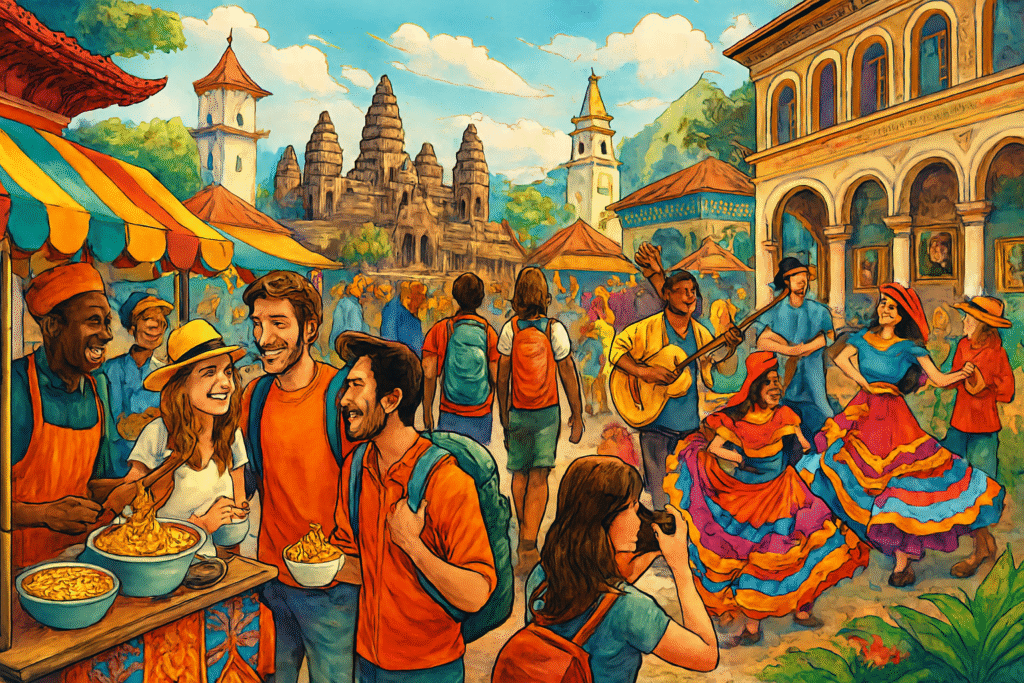
1. Why Travel and Culture Go Hand in Hand
Travel without culture is incomplete. A place is not just about landscapes and architecture—it’s about its stories, people, and traditions.
- Culture gives identity to a destination: From Parisian art galleries to Indian festivals, culture defines what makes a place special.
- Travel fosters understanding: Meeting people from different backgrounds breaks stereotypes.
- Cultural exchange enriches lives: Learning from others inspires creativity and new ideas.
- Preserves heritage: Tourism often supports the preservation of historic monuments, art, and traditions.
2. Top Cultural Destinations to Visit
Certain destinations stand out because of their rich cultural heritage, historic landmarks, and vibrant traditions.
Europe: A Blend of History and Modernity
- Paris, France
- The Louvre Museum, Eiffel Tower, and classical French cuisine.
- Art, fashion, and romantic charm.
- Rome, Italy
- Colosseum, Vatican City, and Renaissance art.
- Street life with pizza, gelato, and music in piazzas.
- Barcelona, Spain
- Gaudí’s architectural masterpieces.
- Flamenco music and Mediterranean lifestyle.
Asia: Tradition Meets Innovation
- Kyoto, Japan
- Ancient temples, geisha culture, and tea ceremonies.
- Cherry blossom festivals.
- Istanbul, Turkey
- Blend of European and Asian cultures.
- Hagia Sophia, bazaars, and Turkish delights.
- Bali, Indonesia
- Spiritual temples, yoga retreats, and vibrant dance.
- Known for cultural festivals like Galungan.
Middle East & Africa: Heritage and Hospitality
- Marrakech, Morocco
- Souks, spices, and Berber traditions.
- Colorful riads and bustling markets.
- Cairo, Egypt
- Ancient pyramids and Nile River cruises.
- Strong Islamic architecture and Coptic history.
- Cape Town, South Africa
- Blend of natural beauty and cultural diversity.
- Township tours, jazz music, and art galleries.
The Americas: Festivals and Landscapes
- New Orleans, USA
- Jazz, Mardi Gras, and Creole cuisine.
- Cultural fusion of French, African, and American traditions.
- Mexico City, Mexico
- Aztec heritage, Day of the Dead celebrations, and spicy cuisine.
- Museums and historic downtown.
- Rio de Janeiro, Brazil
- Famous for Carnival, samba music, and football passion.
- Beaches and Christ the Redeemer statue.
3. Cultural Experiences Every Traveler Should Try
Travel is not just about destinations—it’s about experiences that immerse you in local life.
- Food and Culinary Experiences
- Street food tours in Bangkok.
- Wine tasting in Tuscany.
- Cooking classes in Morocco.
- Music and Dance
- Flamenco shows in Spain.
- Jazz performances in New Orleans.
- Traditional drumming in Africa.
- Art and Architecture
- Museums in Paris and New York.
- Ancient temples in Cambodia.
- Modern art districts in Berlin.
- Spiritual and Wellness Travel
- Yoga retreats in Bali.
- Pilgrimages like the Camino de Santiago.
- Meditation experiences in India.
- Adventure with Culture
- Hiking Machu Picchu in Peru.
- Safari tours combined with local traditions in Kenya.
- Arctic expeditions with indigenous storytelling.
4. Global Cultural Events Worth Attending
Events offer a snapshot of a culture’s values, creativity, and history.
- Carnival in Rio de Janeiro (Brazil)
- Samba parades, music, and costumes.
- Oktoberfest in Munich (Germany)
- Beer, Bavarian food, and folk music.
- Diwali in India
- Festival of Lights with fireworks and family celebrations.
- Chinese New Year (China & Worldwide)
- Dragon dances, lanterns, and feasts.
- Day of the Dead (Mexico)
- Honoring ancestors with vibrant decorations.
- Mardi Gras (New Orleans, USA)
- Colorful parades, jazz, and street performances.
- Edinburgh Festival Fringe (Scotland)
- World’s largest arts festival with theater, comedy, and music.
5. Benefits of Cultural Travel
Cultural travel offers personal growth and deeper understanding.
- Broadens worldview: Teaches empathy and global perspective.
- Supports local economies: Spending benefits communities directly.
- Preserves culture: Tourism supports artisans and traditional practices.
- Boosts creativity: Exposure to different art and lifestyles inspires innovation.
- Improves mental health: Experiencing new environments reduces stress.
6. How to Travel Responsibly and Respectfully
Responsible cultural travel ensures respect for traditions and sustainability.
- Research before you go: Learn about customs and etiquette.
- Respect dress codes: Especially in religious or traditional settings.
- Support local businesses: Buy from local artisans and eat at family-owned restaurants.
- Learn basic phrases: Simple greetings in the local language build connections.
- Be environmentally conscious: Reduce waste, use public transport, and respect natural sites.
- Avoid cultural appropriation: Appreciate without mocking or misusing traditions.
7. Travel Tips for Cultural Immersion
- Stay in homestays or guesthouses rather than international chains.
- Join guided cultural tours led by locals.
- Participate in community-based tourism projects.
- Visit markets and public spaces where locals gather.
- Keep an open mind and be willing to adapt.
8. The Future of Travel and Culture
The future of travel is moving toward sustainable and experience-driven tourism.
- Eco-cultural tourism: Combining environmental awareness with cultural immersion.
- Virtual cultural tours: Museums and heritage sites offering VR experiences.
- Slow travel movement: Spending more time in fewer destinations to immerse deeply.
- Rise of local tourism: Exploring cultural experiences closer to home.
- Cultural preservation initiatives: Protecting languages, art, and heritage through tourism.